Everything you need to know before getting serious about watches. One sitting, no textbook. By the end you will read a spec sheet, walk a dealer’s cases, and browse this database knowing exactly what you are looking at.
Watches in 60 Seconds
Every watch, from a $12 Casio to a $500,000 minute repeater, can be understood through six variables: how it keeps time, what it was designed to do, how it is built, who made it, what it costs, and why anyone cares. That is the whole map. The rest of this guide fills in each one.
Hold on to this framing, because the watch world loves to make itself sound complicated. It is not. A movement powers the watch. A case protects the movement. A dial tells you the time. Everything else, from ceramic bezels to tourbillons, is variation on those three jobs, and variation is where all the fun and all the money live.
A Very Short History of the Wristwatch
Portable timekeeping started in the pocket. For roughly four centuries, a serious watch was a pocket watch, and wristwatches were jewelry for women. Two things changed that: aviation and war. Cartier built the Santos in 1904 so the pilot Alberto Santos-Dumont could read the time without letting go of his controls, and officers in the First World War strapped watches to their wrists because pulling out a pocket watch in a trench was a good way to die. By the 1930s the wristwatch had won.
The next fifty years were about making it survive. Rolex cased a watch against water with the Oyster in 1926 and made it wind itself with the Perpetual rotor in 1931. Dive watches, pilot watches, and field watches followed, built as instruments rather than ornaments, and Switzerland became the industry’s center of gravity while Japan quietly built its own from 1881 onward.
Then Japan nearly ended the whole thing. Seiko’s Astron of 1969 was the first quartz wristwatch: battery powered, electronically regulated, more accurate than any mechanical watch, and eventually far cheaper. The industry calls the fallout the quartz crisis. Through the 1970s and early 1980s, Swiss employment collapsed and centuries-old firms folded or merged. What survived came back in the late 1980s and 1990s with a changed pitch: mechanical watches were no longer sold as the best way to tell time, but as objects of craft, heritage, and pleasure. That pitch built the modern luxury watch culture, and it is why today’s market carries mechanical, quartz, solar, and connected watches side by side, each perfectly good at a job the others do not do.
How a Watch Keeps Time
This is the section worth reading twice, because almost every other conversation about watches assumes you know it.
Mechanical, manual wind
A coiled spring called the mainspring stores energy. A gear train lets that energy out, and an escapement releases it in tiny, regular ticks, paced by a balance wheel oscillating back and forth several times a second. You wind the mainspring yourself by turning the crown. No battery, no electronics, just stored tension and around a hundred parts negotiating its release. The appeal is exactly that: a tiny machine you keep alive by hand. The disadvantages are honest ones: it needs winding every day or two, it is less accurate than any quartz watch, and it needs servicing every five to ten years.
Automatic
An automatic is a mechanical watch that winds itself. A weighted rotor swings with the motion of your wrist and tensions the mainspring for you. Worn daily, it never needs the crown. Left in a drawer, it runs down when its power reserve, typically 40 to 80 hours on modern movements, is spent, and stops until you wind and set it again. The word matters: automatic still means mechanical. It is not a battery watch, and its accuracy and service needs are those of any mechanical movement.
Quartz
A battery sends current through a tiny quartz crystal, which vibrates at 32,768 times per second. Circuitry counts those vibrations and steps the hands. That electronic heartbeat is why a $30 quartz watch is more accurate than a $30,000 mechanical one, usually within about 15 seconds a month, with nothing asked of you but a battery every few years.
Quartz gets dismissed too easily. A $20 Casio and a $3,000 Grand Seiko can both use quartz regulation, but treating them as equivalent makes about as much sense as treating every automatic movement as identical. High-end quartz exists, and some of it is finished as carefully as fine mechanical work.
Solar
Solar watches are quartz watches that never need a battery swap. A photovoltaic cell under the dial charges a rechargeable cell from any light source. Citizen has built its whole identity on this: its light-powered technology dates to 1976 and has carried the Eco-Drive name since the mid-1990s. Seiko Solar and Casio’s Tough Solar do the same job. For a watch you want to pick up and trust after a month in a drawer, solar is the quiet, correct answer.
Spring Drive
Spring Drive, a Seiko and Grand Seiko technology, is routinely misdescribed as quartz. It is not. The power source is entirely mechanical: a mainspring and gear train, wound by hand or rotor, exactly as in an automatic. What changes is the regulation. Instead of an escapement ticking, a glide wheel spins continuously, and an electromagnetic brake, governed by a quartz reference, holds its speed exact. No battery is ever involved; the movement generates its own trickle of electricity. The visible result is a seconds hand that does not tick at all but sweeps in one perfectly smooth glide, backed by accuracy of about one second a day.
High accuracy quartz
Ordinary quartz drifts with temperature. High accuracy quartz, usually shortened to HAQ, compensates for that and is rated in seconds per year rather than per month. Grand Seiko’s 9F calibres are rated to plus or minus ten seconds a year, Citizen’s The Citizen line to five, and Longines chased the same idea for years with its V.H.P. models. These are watches for people who find the engineering of precision itself beautiful.
Smartwatch
Apple, Garmin, and Samsung sell more watches than the entire Swiss industry combined, and they are genuinely useful computers. They are also outside what INDICES covers, for a simple reason: a smartwatch is obsolete in five years, and everything else on this page is designed not to be.
| Type | Power | Typical accuracy | Maintenance | Main appeal |
|---|---|---|---|---|
| Manual mechanical | Hand-wound mainspring | ±10-20 sec/day; certified models tighter | Daily winding, service every 5-10 yrs | Ritual, tradition, thinness |
| Automatic | Rotor-wound mainspring | Same as manual; COSC −4/+6 sec/day | Service every 5-10 yrs | Mechanical, no daily winding |
| Quartz | Battery | ±15-20 sec/month | Battery every 2-5 yrs | Accuracy, price, zero fuss |
| Solar | Light-charged cell | Quartz accuracy | Nearly none | Set-and-forget reliability |
| Spring Drive | Mainspring, quartz-referenced brake | ±1 sec/day (±15 sec/month) | Service like a mechanical | Gliding hand, hybrid engineering |
| HAQ | Battery | ±5-10 sec/year | Battery swaps | Precision as craft |
| Smartwatch | Rechargeable, daily | Network-perfect | Charging, replacement cycle | Apps, health, notifications |
Watch Types, by Style and Purpose
Most watches you will encounter belong to one of about ten families. Knowing them tells you what a watch was built for and what its features are actually doing.
Dive watch. Built for underwater timing: a bezel that rotates one way only, so a knock can shorten your dive but never lengthen it, 200 meters or more of water resistance, glowing lume, a case that shrugs off abuse. The Rolex Submariner defined the template in 1953; the Omega Seamaster Diver 300M and Seiko Prospex line carry it at very different prices. Most never touch water deeper than a pool, and that is fine.
Dress watch. The opposite instinct: thin enough to slip under a shirt cuff, a restrained dial, polished or precious metal, usually leather. Its job is to be elegant and then get out of the way. The Cartier Tank, the Patek Philippe Calatrava, and the Jaeger-LeCoultre Master Ultra Thin are the reference points.
Field watch. Descended from military issue: high-contrast numerals, no frills, tough, cheap to make and easy to read at a glance. The Hamilton Khaki Field is the archetype, the Timex Expedition the budget version, and the Rolex Explorer the idea taken to luxury finishing.
Pilot’s watch. Big numerals, maximum legibility, often a chronograph or a second time zone. IWC’s Pilot’s Watches and the Breitling Navitimer, with its slide-rule bezel for flight calculations nobody performs anymore, carry the tradition.
Chronograph. Strictly a complication rather than a style: a built-in stopwatch. Pushers start, stop, and reset it; subdials count elapsed minutes and hours. The style grew around the function, mostly through motorsport. The Rolex Daytona and Omega Speedmaster, the watch NASA certified for the Moon, are the two great ones.
GMT and travel watches. A fourth hand reads a second time zone against a 24-hour scale. One distinction worth learning: on a traveler’s GMT like the Rolex GMT-Master II, the local hour hand jumps independently, which is what you want crossing time zones; on a caller’s GMT, common on Grand Seiko models, the extra hand is the one you set, which suits checking a distant office’s time from home.
Everyday sports watch. The modern do-almost-everything watch: water resistant enough to ignore, dressy enough for a jacket, tough enough for a weekend. The Omega Aqua Terra, Rolex Oyster Perpetual, and Longines Conquest live here. If you buy one watch, it is probably from this family.
Integrated-bracelet sports watch. A 1970s design language where the bracelet flows out of the case as one shape, usually with a slim profile and an ornate dial texture. Gerald Genta drew the two that matter, the Audemars Piguet Royal Oak and Patek Philippe Nautilus, and the Tissot PRX proves the look works at a two-figure fraction of the price.
Racing watch. A chronograph wearing motorsport clothes: a tachymeter scale on the bezel converts a timed distance into speed, dials go high-contrast, straps get perforated. Heuer built its name here.
Digital. Numbers on a screen, quartz inside, nearly indestructible outside. The Casio G-Shock, born 1983 from an engineer’s goal of a watch that survives a 10-meter drop, and the $20 Casio F-91W are both design icons without a hint of irony.
Tool watch. Not a design but a philosophy: any watch built first to do a job, divers, pilots, field watches all qualify. When collectors say a watch is “toolish,” they mean function visibly outranks decoration.
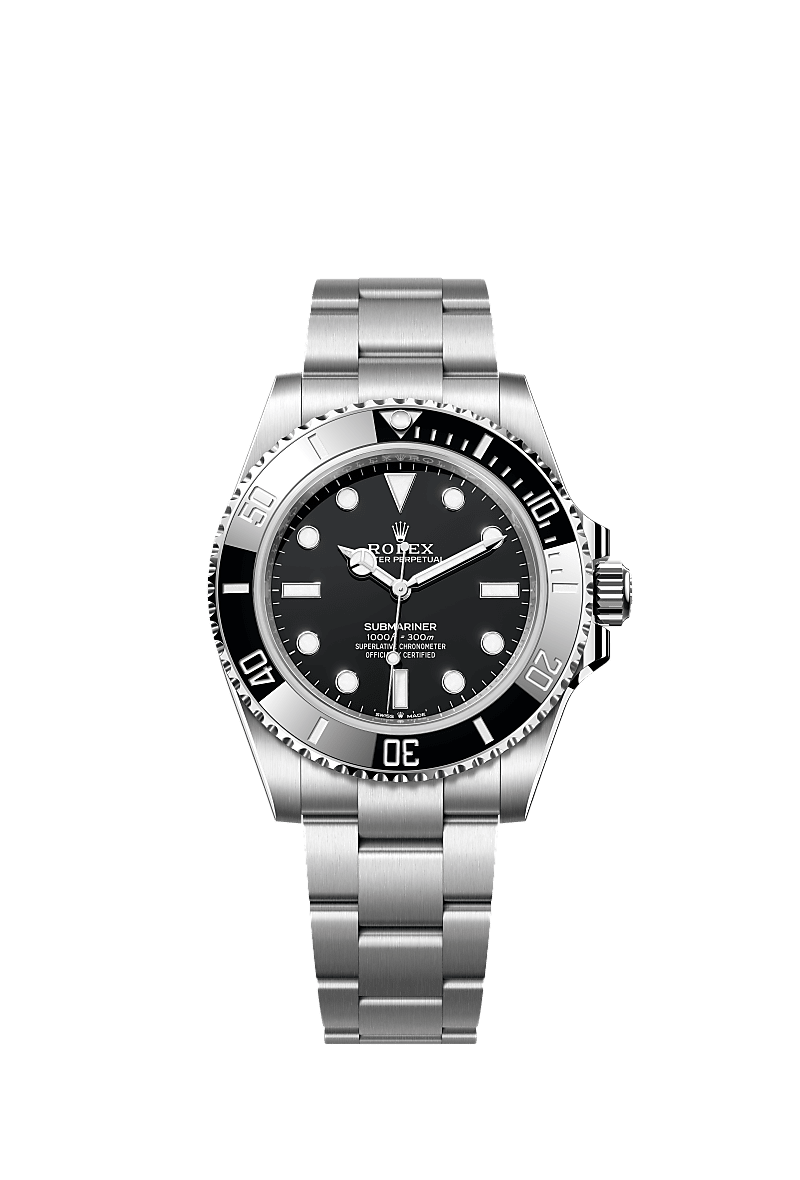

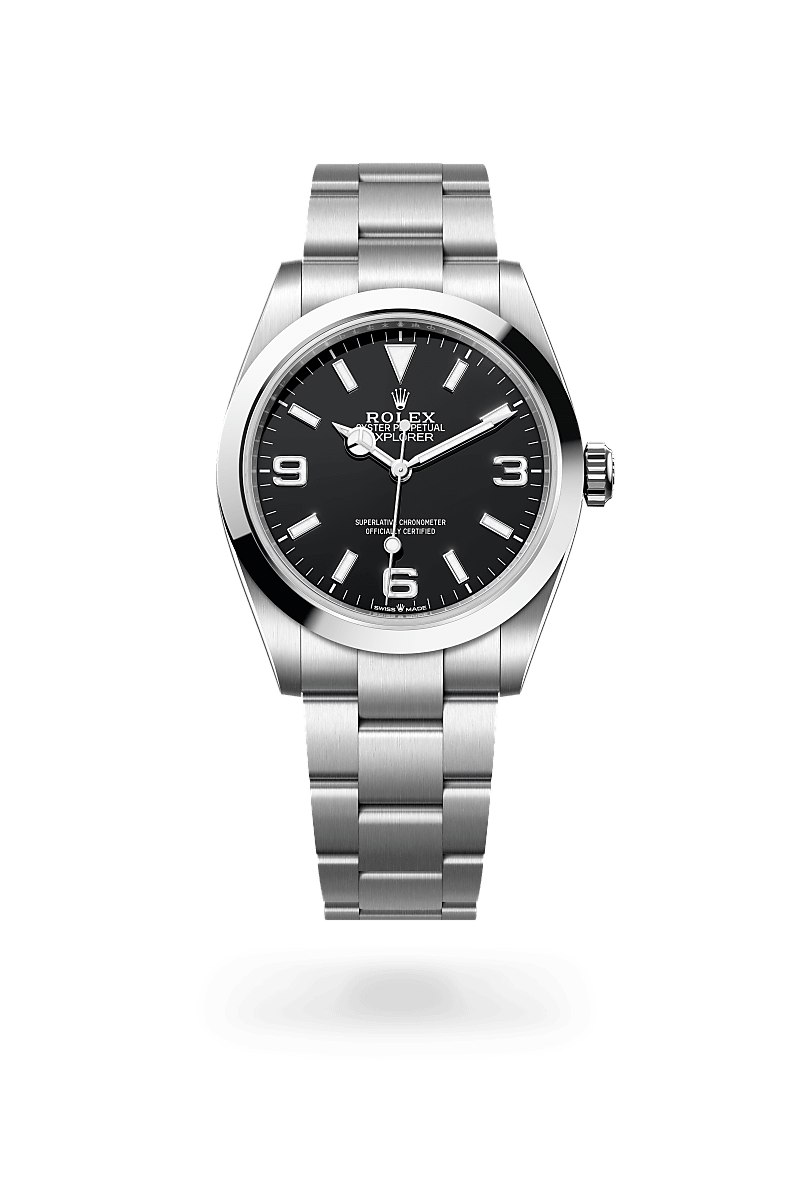

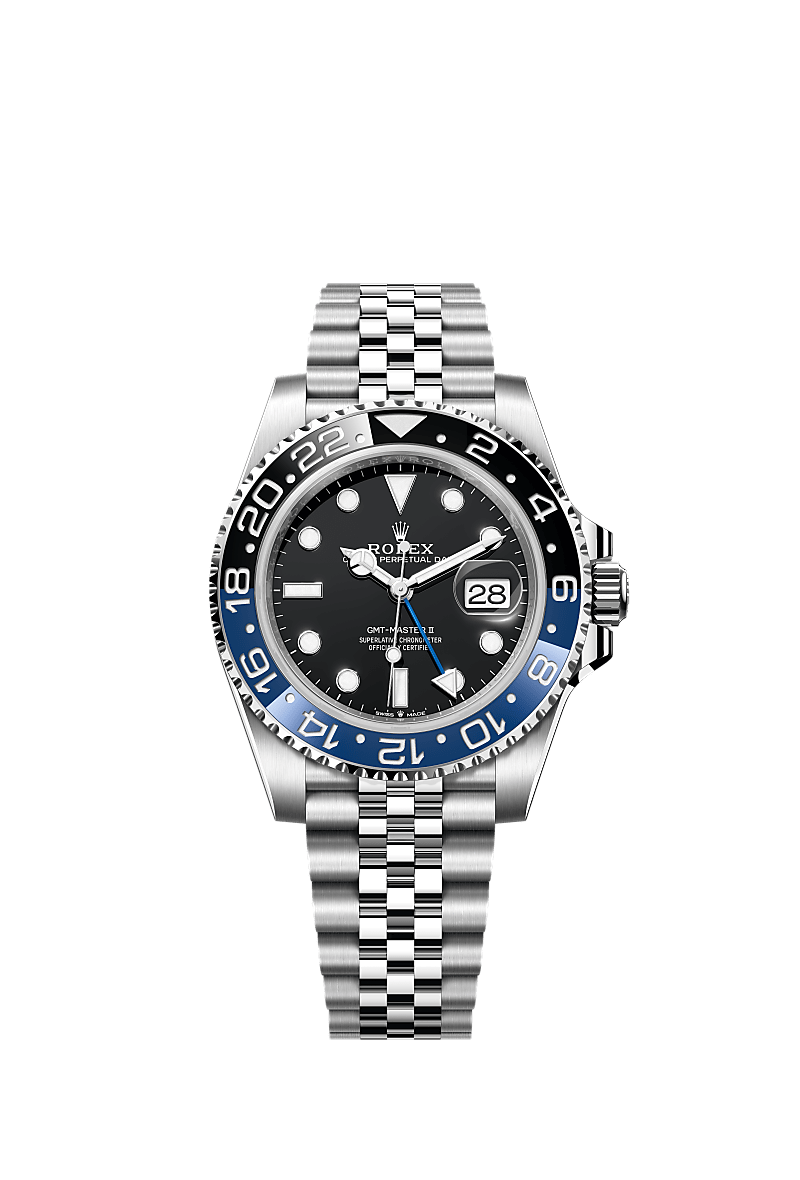

Images: the manufacturers’ official product photography, via the INDICES database.
Watch Anatomy
The case houses everything and takes the abuse. The bezel is the ring around the crystal, sometimes fixed, sometimes a rotating tool. The crystal is the window, and its material decides how it scratches. The crown winds and sets; pushers operate a chronograph. The dial carries hands, a date window if fitted, subdials for extra functions, and the hour markers. The caseback seals the movement away, or shows it off through glass. Lugs are the horns that hold the bracelet or strap, connected by spring bars, closed by a clasp, and finished, on a bracelet, with end links where metal meets case. Inside, the movement is the engine, and everything about how the watch behaves.
Watch Size: What the Numbers Actually Mean
Case diameter is the number everyone quotes, measured across the case excluding the crown: 36mm reads classic, 39 to 41mm is the modern center, 44mm and up is deliberately big. It is also the least reliable number on the page, because diameter alone does not decide how a watch wears.
Lug-to-lug often matters more. It is the full length from the tip of the top lugs to the bottom, and it is the dimension that decides whether a watch overhangs your wrist. A 40mm watch with a 47mm lug-to-lug can wear smaller than a 38mm watch with long, flat lugs at 49mm.
Thickness decides how a watch feels and whether it fits under a cuff: under 10mm is slim, 12 to 14mm is the sports-watch norm, past 15mm you will notice it on desks and doorframes. Lug width is the strap-opening measurement, usually 18 to 22mm, and the number you need when buying straps.
| Wrist | Circumference | Comfortable starting range |
|---|---|---|
| Small | under ~6.5 in / 16.5 cm | 34-39mm diameter, lug-to-lug under ~47mm |
| Medium | ~6.5-7.25 in / 16.5-18.5 cm | 36-42mm diameter, lug-to-lug under ~50mm |
| Large | above ~7.25 in / 18.5 cm | 40-46mm diameter, lug-to-lug to ~54mm |
Treat the table as a starting range, not a rule; plenty of small-wristed people wear 42mm divers happily. And two watches with identical dimensions can wear completely differently, because bezel width, dial opening, case shape, lug curvature, and whether the bracelet integrates into the case all change the visual and physical footprint. Numbers shortlist a watch. Wrists decide.
Materials
| Material | The short version |
|---|---|
| Stainless steel | The default, and for good reason: tough, corrosion-proof, polishable, affordable. Usually 316L; Rolex uses a 904L-family alloy it calls Oystersteel. |
| Titanium | Far lighter than steel and hypoallergenic, with a darker gray tone. Scratches show more readily unless hardened. |
| Gold | Yellow is traditional, rose warms it with copper, white reads almost like steel until the heft gives it away. Soft, heavy, expensive. |
| Platinum | Denser and rarer than gold, with a subtle white luster. The quiet flex of the watch world. |
| Ceramic | Nearly scratch-proof and color-permanent, common in bezels. The tradeoff: it can shatter where metal would dent. |
| Bronze | Develops a living patina that some people love and some scrub off. Either way, that is the point of it. |
| Carbon and composites | Very light, very tough, visually loud. Common in modern sports pieces. |
| Sapphire crystal | The modern standard window: scratch resistance second only to diamond. Can chip on hard corners. |
| Mineral crystal | Hardened glass; scratches more easily, costs much less. Standard on affordable watches. |
| Acrylic / Hesalite | Plastic: scratches constantly, polishes clear in minutes, never shatters dangerously. The Moon was walked on behind Hesalite. |
Complications
A complication is any function beyond telling the time. The everyday ones: a date, a day-date adding the weekday, the chronograph stopwatch, the GMT second time zone, a power reserve indicator showing how much wind remains, and an alarm.
The high-horology tier is where watchmaking shows off. A world timer displays all 24 zones at once. A moonphase tracks the lunar cycle across the dial. An annual calendar knows 30-day from 31-day months and asks for correction once a year, at the end of February; a perpetual calendar handles February and leap years too, and in principle runs correct until 2100. A minute repeater chimes the time on tiny gongs, and remains among the hardest things to build in the field.
Then there is the tourbillon: the escapement mounted in a rotating cage, invented around 1801 to average out gravity’s effect on a pocket watch that lived upright in a pocket. On a wrist that moves all day, it solves a problem you do not have, and a good modern movement without one will keep time as well or better. What a tourbillon demonstrates is craft. It is watchmaking’s figure skating: judged on execution, not on getting anywhere faster.
Common Watch Terminology
Definitions kept short on purpose. Skim now, return later.
Accuracy: how far a watch drifts from true time, quoted per day, month, or year.
Amplitude: how far the balance wheel swings; a health reading taken at service.
Automatic: a mechanical movement wound by a rotor.
Balance wheel: the oscillating heart that paces a mechanical movement.
Beater: a watch you wear without worrying about it.
Bezel: the ring around the crystal; fixed or rotating.
Bracelet: a metal band, in links.
Caliber / calibre: a specific movement model, e.g. calibre 3235.
Caseback: the back of the case; solid or display.
Chronograph: stopwatch function.
Chronometer: a movement certified to a defined accuracy standard, not a synonym for chronograph.
Clasp: the closure on a bracelet or strap.
Complication: any function beyond the time.
COSC: the Swiss chronometer testing institute; its standard is −4/+6 seconds a day.
Crown: the knob for winding and setting.
Crystal: the window over the dial.
Deployant clasp: a folding clasp that keeps a strap in a loop.
Dial: the face.
Escapement: the mechanism releasing power in even ticks.
Exhibition caseback: a glass back showing the movement.
Finishing: the decoration and refinement of parts, functional and otherwise.
Flyback chronograph: restarts timing with one push instead of stop-reset-start.
Frequency: how fast the balance beats, in vibrations per hour or hertz.
GMT: a second time zone display.
Hand-wound / manual wind: wound only by crown.
Indices: the hour markers. Yes, that is where the name comes from.
Integrated bracelet: a bracelet designed as part of the case shape.
Jewel: a synthetic ruby bearing reducing friction; 17 to 31 is typical.
Lume: luminous material on hands and markers.
Lug: the horns holding the strap.
Lug-to-lug: total case length across the lugs.
Mainspring: the coiled spring storing a mechanical watch’s energy.
Micro-adjust: fine sizing built into a clasp.
Movement: the complete mechanism inside.
Power reserve: how long a wound movement runs unworn.
Quartz: electronic regulation by a vibrating crystal.
Reference number: the manufacturer’s model identifier, e.g. 126334. This database is organized by it.
Rotor: the swinging weight that winds an automatic.
Sapphire crystal: synthetic sapphire glass, highly scratch resistant.
Spring bars: the sprung pins holding strap to lugs.
Spring Drive: Seiko’s mechanical drive with electromagnetic regulation.
Subdial: a small dial-within-the-dial for a function.
Tachymeter: a bezel scale converting timed seconds into speed.
Tourbillon: the escapement in a rotating cage; virtuosity, not accuracy.
Water resistance: pressure rating, tested in ideal lab conditions.
Market and collector terms
AD: authorized dealer, a retailer officially appointed by the brand.
Grey market: genuine new watches sold outside official distribution, usually discounted, usually without manufacturer warranty.
Secondary market: everything pre-owned: dealers, marketplaces, auctions, private sales.
Full set: watch plus its original box, papers, and accessories.
Box and papers: the original packaging and dated warranty card; provenance that supports value.
NOS: new old stock, an older watch that was never sold or worn.
MSRP: the manufacturer’s suggested retail price.
Street price: what people actually pay new, discounts included.
Market price: the going rate on the secondary market, distinct from what sellers ask.
Flipper: someone who buys hyped watches to resell at a markup.
Waitlist: the queue an AD keeps for watches demand outstrips.
Allocation: the stock a brand grants each dealer; why the waitlist moves slowly.
Limited edition: a numbered production cap. Not automatically valuable.
Boutique edition: sold only through a brand’s own stores.
Microbrand: a small independent label, typically selling direct online.
Independent watchmaker: a small house outside the big groups, often doing the field’s most original work.
Haute horlogerie: “high watchmaking”: top-tier finishing and complication.
Holy Trinity: collector shorthand for Patek Philippe, Audemars Piguet, and Vacheron Constantin.
The Major Brands, Very Briefly
Fifty-word orientations, not histories. The INDICES Database carries the longer stories.
Understanding the Watch Market
New watches move through three official channels: the MSRP is the brand’s list price; an authorized dealer sells at or sometimes below it, with discounts that vary hugely by brand (Rolex, never; many others, negotiable); a boutique is the brand’s own store, full price, full ceremony.
Outside that sit two markets that confuse beginners. The grey market sells genuine, brand-new watches through unofficial channels, usually at a discount, usually without the manufacturer’s warranty; it is legal and often sensible, but know what warranty you are giving up. The secondary market is everything pre-owned, from professional dealers with authentication and guarantees down to a stranger’s DM.
Three truths about value. A handful of watches trade above retail because demand outruns supply; most watches trade below it, often well below, the moment they leave the store. Resale varies enormously by brand and model, and buying a watch primarily as an appreciating asset is a coin flip dressed as a strategy. And a seller’s asking price is not the market price; the market price is what watches actually change hands for, which is the number INDICES Market cares about. Condition and provenance move all of it, which is why “box and papers” appears in every listing that has them.
Price Ranges: What Money Buys
Price tiers are a map, not a leaderboard. Quality does not climb linearly with cost, and several of the best-engineered watches on this page live in the lower tiers.
| Tier | What is realistically here | Names to know |
|---|---|---|
| Under $250 | Excellent quartz, solar, digital; capable entry automatics. Some of the most iconic designs ever made live here. | Casio, Timex, entry Citizen and Seiko, Swatch |
| $250-$750 | Serious automatics with sapphire and real water resistance; the heart of Japanese value. | Seiko, Citizen, Orient, Tissot, entry Hamilton, Bulova |
| $750-$2,000 | Swiss mechanicals done properly, 80-hour movements, standout Japanese pieces. | Hamilton, Tissot, Mido, Certina, Seiko Prospex/Presage, Christopher Ward, entry Longines |
| $2,000-$5,000 | Entry luxury: certified movements, refined bracelets, real finishing. | Longines, Oris, TAG Heuer, entry or pre-owned Tudor, Grand Seiko quartz, Nomos, Sinn |
| $5,000-$10,000 | The luxury heartland; most flagship steel sports watches list here. | Tudor, Omega, Grand Seiko, Breitling, Cartier, IWC, Rolex depending on model and the waitlist |
| $10,000-$25,000 | Steel Rolex at market reality, precious metals, serious complications, pre-owned high horology. | Rolex, gold Omega, Cartier, IWC, Jaeger-LeCoultre, top Grand Seiko |
| $25,000+ | Haute horlogerie: hand finishing, grand complications, the independents. | Patek Philippe, Audemars Piguet, Vacheron Constantin, A. Lange & Söhne, Richard Mille |
What Actually Makes a Watch Expensive?
Take two automatic watches, both steel, both 100 meters water resistant, both accurate to a few seconds a day. One costs $600, the other $26,000. The difference is some mix of: brand equity built over decades of marketing and history; movement development paid for in-house rather than bought off a shelf; hand finishing, where a single beveled bridge can absorb hours of skilled labor; complications; case materials; low production volume; distribution costs; deliberate scarcity; and plain demand.
A useful lens: technical value is what the watch does and how well it is engineered; luxury value is rarity, artistry, history, and the way it makes you feel. Neither is fake. A Seiko diver is nearly all technical value; a hand-finished Lange is mostly luxury value, and the finishing under a loupe will justify it to anyone who looks. Trouble only starts when a price asks for luxury money without supplying either.
Swiss Made, Japanese Made and Everyone Else
Swiss Made is a legal standard, not a vibe: since 2017 it requires, among other things, that at least 60 percent of manufacturing cost be generated in Switzerland and that the movement be Swiss. It marks real origin, though plenty of components in Swiss watches still travel. Japan runs a parallel great tradition: less romance, more engineering, and at several price points simply more watch. Germany, centered on Glashütte, has its own idiom of restraint and rigor. America built the railroad-era industry and lost it; the heritage survives in names like Hamilton, Timex, and Bulova, mostly made elsewhere now. And China manufactures at every quality level, from disposable to genuinely fine; the lazy assumption that Chinese means cheap stopped being accurate years ago. Most affordable watches, whatever the label, draw on global supply chains.
In-House Versus Third-Party Movements
An “in-house” or manufacture movement is developed by the brand itself. A third-party movement is bought from a specialist: ETA and Sellita in Switzerland, Miyota (Citizen) and Seiko in Japan. Enthusiast culture treats in-house as a badge of honor, and the phrase gets stretched in marketing often enough to deserve your skepticism.
Here is the honest trade. Common third-party movements are cheap to service, with parts available to any competent watchmaker, and their reliability is proven across millions of units; a Sellita SW200 is a known quantity the way a Toyota engine is. Manufacture movements offer exclusivity, tighter integration with the watch, often better specs and finishing, and real engineering achievement, at the cost of pricier, slower, brand-dependent service. Neither is simply better. A workhorse movement in a $900 watch is a feature, not a compromise.
Accuracy, Practically
A standard mechanical watch running within 10 to 20 seconds a day is healthy. A COSC-certified chronometer must hold −4 to +6 seconds a day; Rolex tightens that to ±2 in-house, and METAS Master Chronometer certification (used by Omega and some Tudor models) adds 0 to +5 a day plus resistance to 15,000-gauss magnetic fields. Ordinary quartz drifts around 15 seconds a month; HAQ is rated in seconds a year; radio-controlled and GPS watches sync themselves and are effectively perfect. Note the units when you compare: mechanical accuracy is quoted per day, quartz per month or year. That gap is the whole quartz revolution in one sentence, and mechanical watches are loved anyway.
Water Resistance, Honestly
| Rating | Sensible use |
|---|---|
| 30m | Rain and handwashing splashes. Not swimming, whatever the number implies. |
| 50m | Brief swimming at most; better to keep it dry. |
| 100m | Swimming and snorkeling with confidence. |
| 200m | Proper dive-watch territory, including scuba. |
| 300m+ | Professional and saturation diving; overkill, gloriously. |
The ratings describe a new watch in still lab water, which is why the guidance above is deliberately conservative. Three habits keep the rating true: make sure the crown is fully pushed in or screwed down before water, remember that the sealing gaskets age and dry out, and have a watch pressure tested every year or two if it genuinely swims. Water resistance is a maintained condition, not a permanent property.
Bracelets and Straps
Metal first: the three-link Oyster-style bracelet is the tough, sporty default; the five-link Jubilee-style dresses the same watch up and drapes more comfortably; an integrated bracelet is part of the design and mostly non-negotiable; mesh or Milanese reads mid-century and elegant. Then the straps: leather for dress, rubber for water and sport, NATO and fabric for cheap, colorful, secure one-piece utility. Closures matter more than beginners expect: a pin buckle is simple, a deployant clasp protects the strap and the watch from drops, micro-adjust lets a bracelet breathe with your wrist across a day, and quick-release spring bars make swaps tool-free. The cheapest transformation in watches is a strap change; one watch with three straps is honestly three watches.
Buying Your First Serious Watch
Ten questions, in order:
- What is my real budget, including a strap or sizing?
- Where will I actually wear it: office, weekends, water, everywhere?
- Mechanical for the craft, or quartz for the convenience?
- What size fits my wrist: diameter, lug-to-lug, and thickness?
- Bracelet or strap, and can I change my mind later?
- How much water resistance does my life require?
- Do I care what it resells for, or is that irrelevant?
- New with warranty, or pre-owned with value?
- Do I care about movement finishing enough to pay for it?
- Can I afford the service bill in five years, not just the price today?
One principle beats them all: buy the watch you keep thinking about, not the one a forum insists every collection needs. The internet’s consensus watch on your wrist, unloved, is worth less than a weird one you reach for daily.
New Versus Pre-Owned
New buys you the full manufacturer warranty, untouched condition, known provenance, and a dealer relationship that can matter with allocated brands. Pre-owned buys the same watch minus the first owner’s depreciation, opens up discontinued references no store can sell you, and skips the waitlist entirely. The tax on pre-owned is risk: condition, authenticity, and stolen goods all live in the gap between a reputable dealer and a too-good listing. Buy the seller before you buy the watch: established dealers with authentication, return policies, and long track records earn their margin. For anything expensive from an unknown party, an independent authentication is cheap insurance.
Common Beginner Mistakes
All of these are survivable. Most of us made several.
- Buying for resale before you know what you like. You are not a hedge fund.
- Buying the brand instead of the watch on your wrist.
- Assuming automatic is automatically better than quartz. Reread the Grand Seiko sentence above.
- Shopping by diameter alone and ignoring thickness and lug-to-lug, then wondering why it wears badly.
- Memorizing movement specs while ignoring comfort. You wear a watch; you do not wear a spec sheet.
- Accumulating ten cheap almost-right watches before figuring out taste. That money was one right watch.
- Paying hype premiums for watches that were sitting in cases a year earlier.
- Assuming limited edition means valuable. Usually it means marketing.
- Calling every purchase an investment. It is a purchase.
- Forgetting service costs, which on luxury pieces run hundreds every five to ten years.
- Ignoring bracelet quality, which you touch more than any other part.
- Buying a watch because someone said every collection needs one. No collection needs anything.
How to Build a Collection
There is no required formula, only patterns that people find satisfying. The one-watch collection is a single versatile piece worn into personal history, and it is criminally underrated. The classic three-watch collection covers an everyday watch, a dress watch, and a sport or tool piece, and genuinely does answer every occasion. From there, collectors go where curiosity points: a category focus: all divers, all chronographs, or all GMTs; a brand obsession; a movement tour through manual, automatic, quartz, HAQ, and Spring Drive; vintage, with its patina and its risks; a value collection proving how much watch $500 buys; or the long climb toward high horology. Taste is the only rule. A coherent collection is one that looks like the person who built it.
Where INDICES Fits
This guide is the front door; the rest of the site is the library. The Database holds brands, collections, and individual references with verified specifications and official imagery. Compare puts watches side by side. Market tracks what things actually cost. The Wire carries the news, updated through the day, and Guides continues where this one stops. Everything is built on the editorial standards you can read in two minutes: verified, sourced, dated, or absent.
Quick Reference Cheat Sheet
| Automatic | Self-winding mechanical watch |
| Quartz | Electronically regulated watch using a vibrating quartz crystal |
| Spring Drive | Mainspring-powered, electromagnetically regulated; smooth-gliding seconds |
| GMT | Additional time-zone display |
| Chronograph | Stopwatch function |
| Chronometer | Movement certified to a defined accuracy standard |
| Power reserve | How long a wound mechanical watch runs unworn |
| Lug-to-lug | Case length from top lug tip to bottom; the fit number that matters |
| Indices | The hour markers on a dial |
| Reference | The manufacturer’s specific model identifier |
| Complication | Any function beyond basic timekeeping |
| AD | Authorized dealer |
| Grey market | Genuine watches sold outside official distribution |
| Market price | What watches really trade for, as opposed to MSRP or asking prices |
Now go browse the Database. You will understand what you are looking at, which was the whole point.